Reports

GGF APPLICATION
Hits: 949
SECTION 1. BASIC DATA
- Name of Organization - Foundation for the Conservation of the Earth (FOCONE)
- Contact person - Patrick Chiekwe
Chief Executive Office
- Address - 20 Joinkrama (Ogwa) Street, Diobu, Mile 1, Port Harcourt, Rivers State, Nigeria.
4.Contact Number - (+234) 8061162477
- Email Address - This email address is being protected from spambots. You need JavaScript enabled to view it., This email address is being protected from spambots. You need JavaScript enabled to view it.
- Website - focone.org.ng
SECTION 2. PROJECT DESCRIPTION
The aim of the project is to improve the accessibility and effective use of non-judicial grievance mechanism among the people of the Niger Delta in Nigeria.
The purpose of the project is that citizens are equipped with knowledge, skills and tools on non-judicial mechanism that will enable them to file complaints with appropriate tools to the right authority.
FOCONE aims to cover one (1) State in the Niger Delta area focusing on creating awareness on the effectiveness and accessibility of non-judicial grievance mechanism for communities who experience adverse human rights impacts as a result of business activities.
FOCONE will also focus on capacity building of selected persons from affected communities and individuals as well as civil society organizations seeking to address and prevent human rights abuses using non-judicial grievance mechanism governing business and human rights.
There will be media engagement and multi-stakeholder dialogue as to create critical mass awareness of non-judicial grievance mechanism among the media and other stakeholders in the Niger Delta.
The target audience of the project will include the following stakeholders:
-Negatively impacted workers
-Community members who are victims who lack knowledge about the existence of the non-judicial grievance mechanism as well as the resources and capacity to use them in the oil bearing communities.
-Community members and Individuals
-Civil Society Organizations (CSOs) seeking to address and prevent human rights abuses and violations related to corporate activity of the IOCs.
SECTION 3. CONTEXT AND POLICY ENVIRONMENT FOR THE PROPOSED PROJECT
In 2011, the United Nations Human Rights Council (UNHRC) endorsed the UN Guiding Principles on Business and Human Rights (UNGP).
Both the Framework and the UNGP rest on three Pillars – The State duty to protect against Human Rights abuses by third parties including businesses; The corporate responsibility to respect Human Rights; Access to Remedy for affected victims through Judicial and Non-Judicial grievance mechanism.
The aim of the UNGP is to guide Government, Corporate and other relevant stakeholders in ensuring that business operations around the world do not negatively impact and abuse human rights of citizens.
Since the adoption of the UNGPs, States from variety of regions around the globe have committed in principle to the UNGP and other business and human rights (BHR)frameworks, yet significant work remains to be done on the parts of the Third pillar as it relates to non-judicial grievance mechanism. This is the basis upon which this project is conceived.
In the Niger Delta region, the non-judicial grievance mechanism is being mildly applied.
In January 2011, Friends of the Earth International and Amnesty International filed complaint against Shell to the Dutch National Contact Point (NCP) for disclosing false, misleading and incomplete information about oil spill in Nigeria to avoid liability and having to pay compensation for harming people and their livelihoods. As of May 2013, Mediation have begun, known as Bodo Mediation Process facilitated by the Dutch Embassy in Nigeria and National Coalition on Gas flaring and Oil spill in the Niger Delta (NACGOND), a civil society coalition in the Niger Delta. . Appreciable progress had been made by both parties towards cleaning the environment and payment of compensation. In other communities of the Niger Delta area, there are complaints and concerns of land grabbing, legacy oil spills, improper remediation, , refusal to compensate the people for damaged crops and livelihoods, improper stakeholder consultation, extrajudicial killings by security agents engaged by the multinational oil and gas companies (SPDC, NAOC, ELF/TotalFina, Chevron, Mobil etc).
The communities are in dare need to file complaints in line with their concerns but lack knowledge and skills of non-judicial grievance tools and where to forward the complaints. It is imperative to equip the community members and the stakeholders with knowledge, skills and tools on non-judicial grievance mechanism that will address their concern and for sustainable peace in the Niger Delta area.
In October 2013, Foundation for the Conservation of the Earth (FOCONE), Nigeria participated in the Advanced African Regional Training Workshop on Business and Human Rights and Grievance Mechanism in Kenya, facilitated by SOMO of Netherland in collaboration with the Kenya Human Rights Commission (KHRC). The training was funded by the Dutch Government through the Ministry of Foreign Affairs. The knowledge, skills and practical tools obtained have to be relayed to communities to effectively file complaints using the right grievance mechanism available and douse the tension that is being built up.
SECTION 4. PROJECT IMPLEMENTATION, SUSTAINABILITY AND BUDGET
To achieve the above proposal, we must undertake the following activities:
-Mapping of communities and corporate organizations with human rights concerns and violations.
-Advocacy visit to traditional rulers and opinion leaders to introduce the project and ensure their endorsement.
-Organize public meeting to sensitize communities and explain the project and obtain their support for full participation of the entire community.
-Facilitate the selection of persons to be trained in target communities.
-Production of Information, Education and Communication (IEC) materials on non-judicial grievance mechanism and various tools to file complaints.
-Train – the – Trainer (TOT) for the CSOs, NGOs, FBOs and CBOs on non-judicial grievance mechanism.
-Capacity building for community members and Individuals on non-judicial grievance mechanism.
-Media engagement.
-Facilitate filling of complaints for selected communities and Individuals on acquired grievance mechanism tools.
SUSTABILITY OF THE ACTION
Judicial proceedings are often time-consuming and costly, it is envisaged that target beneficiaries are likely to embrace the non-judicial grievance mechanism as it can contribute to faster, potentially more effective and more direct remedy for victims of human rights abuse and violations.
Despite that the project is proposed for one year, we shall also create linkages for aggrieved communities to enhance its usage. We also believe that the success of this project and some trial cases will encourage other communities and individuals to continue with the usage of non-judicial grievance mechanism.
BUDGET
-Mapping of communities and corporate organizations with human rights concerns and violations. - 300 Dollars
-Advocacy visit to traditional rulers and opinion leaders to introduce the project and ensure their endorsement/ Consultation. - 700 Dollars
-Organize public meeting to sensitize communities and explain the project and obtain their support for full participation of the entire community/ Mobilization. - 1,300 Dollars
-Facilitate the selection of persons to be trained in target communities. - 200 Dollars
-Production of Information, Education and Communication (IEC) materials on non-judicial grievance mechanism and various tools to file complaints. - 1,500 Dollars
-Train – the – Trainer (TOT) for the CSOs, NGOs, FBOs and CBOs on non-judicial grievance mechanism. - 1,400 Dollars
-Capacity building for community members and Individuals on non-judicial grievance mechanism. - 1,900 Dollars
-Media engagement. - 1,000 Dollars
-Facilitate filling of complaints for selected communities and Individuals on acquired grievance mechanism tools.- 500 Dollars
Personnel Cost - 1,000 Dollars
TOTAL BUDGET - 9,800 Dollars
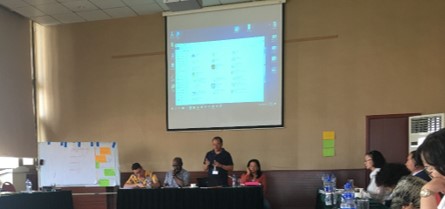
|
S/N |
Activity |
Date of Activity |
Location |
Outcome |
|
2016 Activities |
||||
|
1. |
2.3 Sensitisation of communities to stop pipeline and artisanal refining of the Crude oil. |
8/11/2016 |
Okwuzi, Ogba/Egbema/Ndoni L.G.A., Rivers State. |
Increased support for other income generation options and denouncement of oil theft and artisanal refining in the Niger Delta. |
|
2017 Activities |
||||
|
1. |
5.1 Advocacy visit to Head of School. |
12/4/2017 |
Government Senior Secondary School (G.S.S), Omoku, Ogba/Egbema/Ndoni L.G.A., Rivers State. |
Increased school management support for the establishment of environmental club for students to groom them as environmental change agents in the Niger Delta. |
|
2. |
5.2 Setting-up of Clubs in targeted Community Secondary Schools. |
19/4/2017 |
Government Senior Secondary School, Omoku, Ogba/Egbema/Ndoni L.G.A., Rivers State. |
Enhanced platform for secondary schools students to become environmental change agents in the Niger Delta. |
|
3. |
5.3 Conduct Environmental education and training of Clubs, and mapping out action plan. |
23/5/2017 |
Government Senior Secondary School, Omoku, Ogba/Egbema/Ndoni L.G.A., Rivers State. |
Increased students’ capacity to act as environmental change agents in the Niger Delta. |
|
4. |
3.1 Awareness raising on National Climate Change policy (NASPA –CCN). |
28/9/2017 |
Deputy Paramount Ruler’s Palace, Ban-Gio, Tai L.G.A., Rivers State. |
Improved participants’ readiness to engage in forestry development and natural resource conservation. |
|
2018 Activities |
||||
|
1. |
5.1 Advocacy visit to Heads of targeted schools for their endorsement and support of the project objective. |
9/5/2018 |
Ban-Ogoi community, Tia L.G.A., (Ogoni land), Rivers State. |
Increased school management support for the establishment of environmental club for students to groom them as environmental change agents in the Niger Delta. |
|
2. |
5.2 Setting-up of Clubs in targeted Community Secondary Schools in the Niger Delta. |
17/5/2018 |
Ban-Ogoi community, Tia L.G.A., (Ogoni land), Rivers State. |
Enhanced platform for secondary schools students to become environmental change agents in the Niger Delta. |
|
3. |
5.5. Conduct a visit to the schools/clubs to assess performance and impact on their peers. |
22/5/2018 |
Government Senior Secondary School, Omoku, Ogba/Egbema/Ndoni L.G.A., Rivers State. |
Increased knowledge and visibility of the club in the school.
|
|
4. |
5.3 Conduct Environmental education and training of Clubs, and mapping out action plan. |
30/5/2018 |
Ban-Ogoi community, Tia L.G.A., (Ogoni land), Rivers State. |
Increased students’ capacity to act as environmental change agents in the Niger Delta. |
|
5. |
5.5. Conduct a visit to the schools/clubs to assess performance and impact on their peers. |
4/6/2018 |
Community Secondary School (C.S.S), Ban-Ogoi, Tia L.G.A., Ogoni, Rivers State. |
Increased knowledge and visibility of the club in the school.
|
|
6. |
Facilitating the mapping of action plan for the environmental club. |
7/6/2018 |
Ban-Ogoi community, Tia L.G.A., (Ogoni land), Rivers State. |
Increased readiness to act as environmental change agents in the Niger Delta. |
|
7. |
5.5. Conduct a visit to the schools/clubs to assess performance and impact on their peers. |
22/10/2018 |
Omoku, Ogba/Egbema/Ndoni L.G.A., Rivers State. |
Increased demonstration of environmental knowledge by other students that are not members of the club. |
|
8. |
5.5. Conduct a visit to the schools/clubs to assess performance and impact on their peers. |
23/10/2018 |
Ban-Ogoi community, Tia L.G.A., (Ogoni land), Rivers State. |
Increased demonstration of environmental knowledge by other students that are not members of the club. |
|
9. |
3.1 Awareness raising on National Climate Change policy (NASPA –CCN). |
5/11/2018 |
Bunu community, Tia L.G.A., (Ogoni land), Rivers State. |
Improved participants’ readiness to engage in forestry development and natural resource conservation. |
|
2019 Activities |
||||
|
1. |
5.1: Advocacy visits to Head of schools for their endorsement and support of the project objective. |
6/6/2019 |
Community Senior Secondary School, Akpajo-Eleme, Eleme L.G.A, Rivers State. |
Increased school management support for the establishment of environmental club for students to groom them as environmental change agents in the Niger Delta. |
|
2. |
5.2 Setting-up of Clubs in targeted Community Secondary Schools in the Niger Delta. |
11/6/2019 |
Community Senior Secondary School, Akpajo-Eleme, Eleme L.G.A, Rivers State. |
Enhanced platform for secondary schools students to become environmental change agents in the Niger Delta. |
|
3. |
5.3 Conduct Environmental education and training of Clubs, and mapping out action plan. |
18/6/2019 |
Community Senior Secondary School, Akpajo-Eleme, Eleme L.G.A, Rivers State. |
Increased students’ capacity to act as environmental change agents in the Niger Delta. |
|
4. |
5.5. Conduct a visit to the schools/clubs to assess performance and impact on their peers. |
11/9/2019 |
Community Senior Secondary School, Akpajo-Eleme, Eleme L.G.A, Rivers State. |
Increased knowledge and visibility of the club in the school.
|
|
5. |
5.5. Conduct a visit to the schools/clubs to assess performance and impact on their peers. |
13/9/2019 |
Ban-Ogoi community, Tia L.G.A., (Ogoni land), Rivers State. |
Increased demonstration of environmental knowledge by other students that are not members of the club. |
Participating Organization: Foundation for the Conservation of the Earth (FOCONE)
Name of person filling out evaluation: Kingsley Ozegbe
Country & Region: Nigeria, Africa.
Project: Talc Double Standards
Project Objective: To raise awareness about some harmful substances in J&J talc product to elicit public demand and government action to remove their cosmetic products from sales in Nigeria.
Timeframe: Four Months – October 2020 to January 2021.

The meeting of the Nigerian Working Group (NWG) on the Voluntary Principles on Security and Human Rights (VPs) held at the Swiss Residence, Maitama, Abuja, on 24th September, 2019 by 2pm, had a total of 20 attendees. The agenda (Annex 1) and a list of participants (Annex 2) are annexed to this report.
Roundtable-Introduction (New participants/Observers):
The Co-Chairs welcomed everyone in attendance and expressed appreciation for their early arrival. A tour de table was done for the benefit of new participants and observers. The members acknowledged the presence of Observers institutions and organizations from Solid Minerals Development Fund, under the Ministry of Mines and Steel Development represented by its Executive Secretary Mrs. Hajiya Fatima Umaru Shinkafi and Mr Al-Amin Ebhota. As well as Natural Resource Governance Institute represented by Mr. Zira John Quaghe.
Preamble
Distinguished ladies and gentlemen,
It gives us immense pleasure to welcome you to the 6th ACCA General Assembly, the first in West Africa since the inauguration of the Coalition in the region in 2013. Without doubt, we have come a long way in the brief period of our existence, and in the past year, we made meaningful strides.
Major activities
A major focus for ACCA in the past reporting period was our regional capacity building on our thematic work streams: Free, Prior, and Informed Consent; and on Access to Remedies; and the Binding Treaty on Business and Human Rights. In this period, we organized and facilitated 2 sub-regional workshops on this topics in Ghana, for West Africa, and Tanzania for East Africa. In addition to building the capacity of our members in East Africa, we also held a capacity building session for members of the Pan African Parliament on the UN Treaty for Business and Human Rights.
Our regional capacity building workshop for Southern Africa was postponed due to the xenophobic attacks in South Africa where the event had been billed to hold.
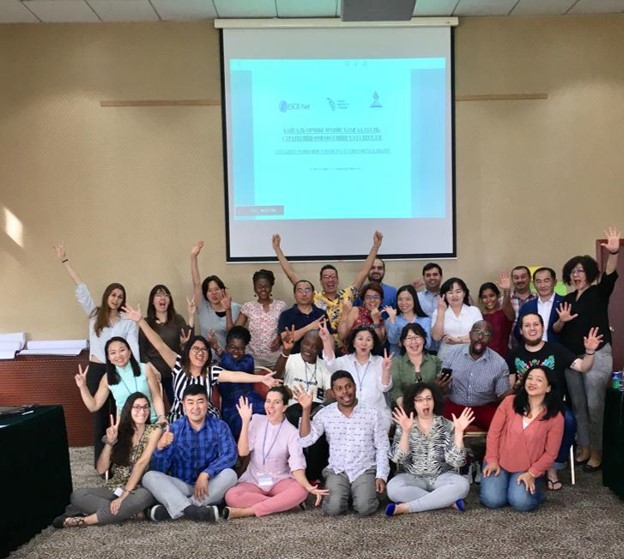
Overview: From 11-14 June 2019, in Ulaanbaatar, Mongolia, the Centre for Human Rights and Development (CHRD), and their partner the Open Society Forum, co-organized with the Strategic Litigation Working Group (SLWG) of ESCR-Net a strategic litigation workshop entitled “Enforcing Environmental Rights.” Over two dozen litigators and other human rights advocates from organizations in Africa, Asia, Europe, Latin America and the Middle East attended.
This workshop was the first of a series envisioned by the SLWG to bring together human rights litigators, other advocates and movement leaders to analyze and strategize about existing casework, jurisprudence, and legal openings concerning themes prioritized by network members and responsive to the global ESCR challenges described in the network’s social movement-derived Common Charter for Collective Struggle. These systemic challenges include impoverishment and dispossession amid abundance; corporate capture of the state; deepening inequality; degradation of ecosystems and a changing climate; and growing repression of human rights defenders.